
BevAnn Tyler’s ‘Pop Pop Looks Like Me’ explores how children understand family, identity, and change through a rainy Saturday morning that shifts everything six year old Evan thought he knew about his grandfather. When the PopPop from the photograph does not match the PopPop who walks through the door, Evan must learn that people grow older while love stays the same. This is a story about connection across generations and the moment a child begins to see beyond appearance.
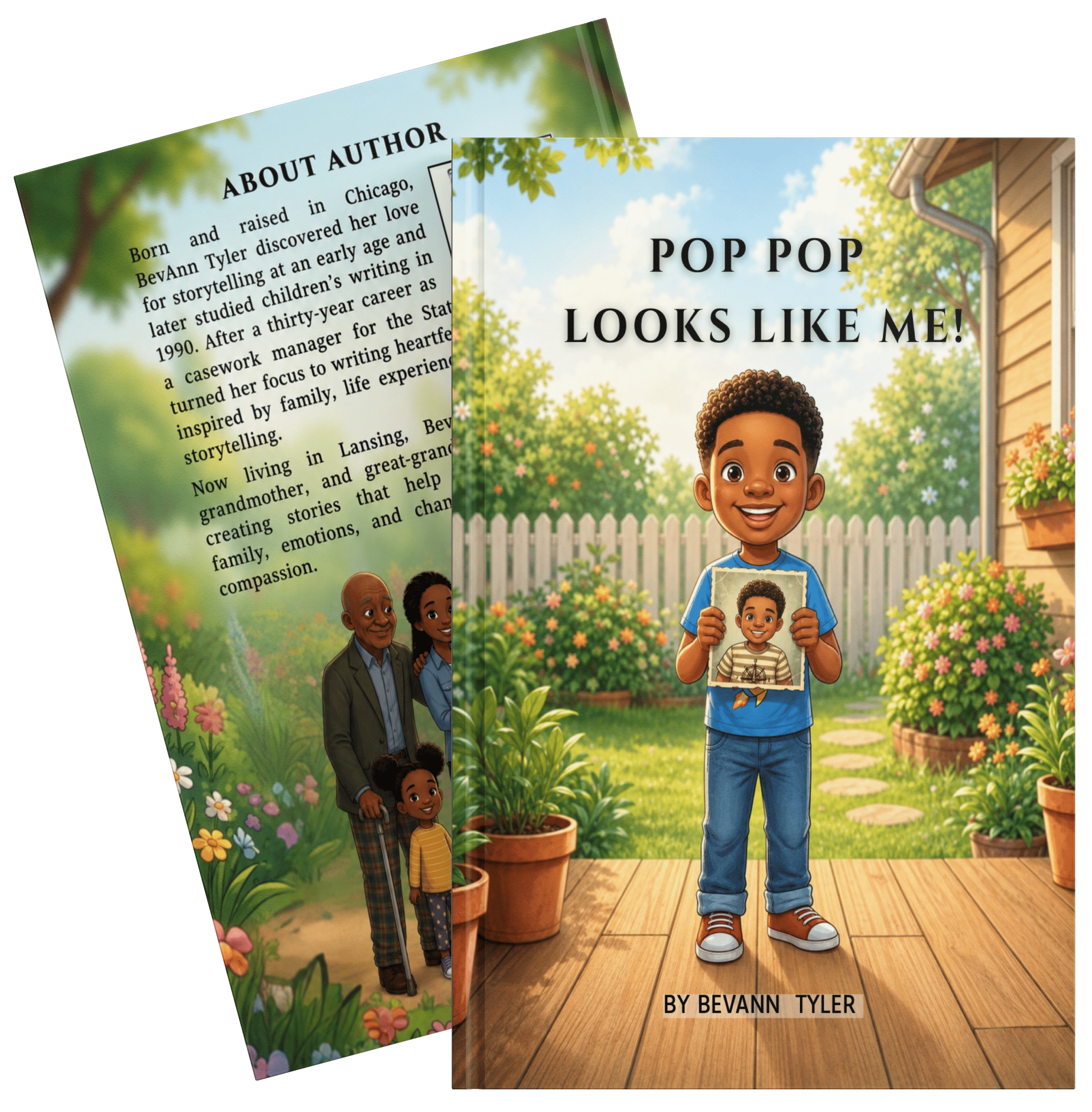


Pop Pop Looks Like Me’ is a thoughtfully crafted story that explores how children understand family, identity, and change through everyday moments. On a rainy Saturday morning, six-year-old Evan waits eagerly for a visit from his grandfather, PopPop. As breakfast fills the kitchen with warmth and familiar routines unfold, Evan clings to a photograph that convinces him PopPop looks just like him. That belief shapes his excitement and expectations for the day, grounding his understanding of who his grandfather is and what their time together might bring.
When friends arrive and a small conflict leads to the photograph being torn, Evan feels hurt, confused, and misunderstood. Those emotions deepen when PopPop finally arrives and does not match the image Evan has carried in his mind. What follows is a sincere portrayal of a child struggling to reconcile imagination with reality. With gentle reassurance from his mother and a quiet moment of connection with PopPop, Evan begins to understand that people grow older while the essence of who they are remains.
Watch the story of Evan, a six year old boy who learns that his beloved PopPop is not the young boy from the photograph but an elderly man who loves him just the same. This heartfelt preview captures the emotional journey of a child discovering that people change while love remains constant.
COMING SOON
My five year old was confused about why her great grandmother looked so different from pictures we had shown her. This book gave us a way to talk about it that she understood. After reading it together, she asked to see more old photos and started making connections herself. The story made something abstract feel concrete for her.
As a grandmother, I appreciated how this book treats the child's feelings seriously. Evan is not told he is being silly for being upset. His emotions are validated before he is guided toward understanding. That is exactly how adults should handle these moments with children, and seeing it modeled in a story was helpful.
I teach first grade and we read this during a unit on families. Several students had never met their grandparents or only knew them as elderly people. The book sparked great conversations about how everyone changes and how we can still recognize family connections even when people look different.
My son has mild anxiety about change and new situations. Meeting his grandfather for the first time was stressful because the grandfather did not look like my son expected from photos. Reading this book beforehand helped prepare him. He still felt surprised, but he had language for what he was feeling and understood it was normal.
What I loved about this story is that it does not rush Evan toward acceptance. He gets to be upset. He gets to have a tantrum. Then, when he is ready, his mother helps him understand. Too many children's books skip over the messy emotions and go straight to the lesson. This one honors the process of getting there.
My daughter asked why I have gray hair now when I had brown hair in old pictures. This book helped me explain aging in a way that made sense to her. She kept saying "you are still you" afterward, which was exactly the point.